

From reducing fine lines to clearing up acne, LED light therapy masks has been the center of attention. What began in the 1990s by NASA as a way to promote cell and tissue growth, is now used dermatologists and aestheticians to address various skin concerns. But the question is, does it actually work?
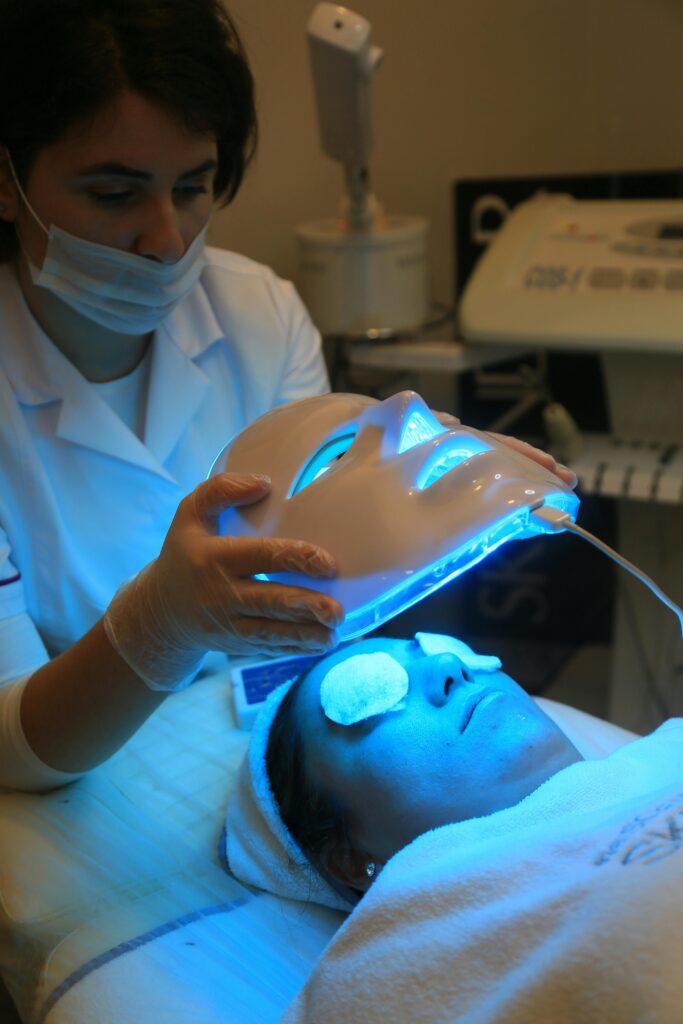
LED light therapy is a widely used noninvasive treatment for acne, sun damage, wounds, and various other skin concerns. There are different wavelengths used with LED light treatment.
What Are the Benefits
Blue Light Therapy (BLT) uses low-level wavelengths, so it can only treat areas the light can reach, it typically treats conditions on or just below the skin’s surface
- Treat and prevent acne
- Blue light helps destroys P. acnes bacteria, reducing breakouts and preventing future acne flare-ups
- Reduce inflammation
- It calms skin inflammation by decreasing immune cell activity, making it effective for reducing redness and swelling.
- Minimizes pores
- By controlling oil production and preventing blockages, blue light can lead to clearer pores and a smoother appearance.
- Clear skin discolouration
- Blue light helps fade post-acne marks by speeding up healing and reducing the risk of hyperpigmentation.
Red Light Therapy (RLT) uses medium to high-level wavelengths, penetrating the skin to stimulate collagen and reduce inflammation
- Improves blood circulation
- Red light boosts blood flow, delivering nutrients and oxygen that accelerate healing, reduce scar tissue, and promote smoother skin.
- Reduce wrinkles
- Red light stimulates collagen production, which firms the skin and reduces the appearance of fine lines and wrinkles.
Both blue and red light therapy promote overall skin health and texture, resulting in a healthier, more even-toned complexion.
Blue Light Therapy is More Aggressive
Red light therapy uses high-level wavelengths, penetrating the skin. The deeper penetration is why it can reach the dermis to stimulate collagen production and aid in wound healing. It’s more restorative than destructive, which is why it’s considered much gentler without skin irritation.
While blue light therapy uses low-level wavelengths, focusing on surface level skin concerns, it is much more aggressive. Despite only penetrates superficially, it actively kills bacteria and can dry out the skin, making it feel more aggressive for those with sensitive or already irritated skin.
Side Effects
Both blue and red light therapies are generally safe for at home or clinic use. Some temporary minor side effects include:
Blue Light Therapy:
- Dryness or Flakiness (will be more common for those with sensitive skin)
- Mild redness or irritation after treatment
- Slight sensitivity to light
Red Light Therapy:
- Temporary redness or tightness (usually subsides quickly)
The side effects should only last a couple hours to a day, with dryness persisting for a couple days. The longevity of the side effects can be reduced with shorter sessions, lower intensity, more rest between treatments, and daily moisturizing. If side effects persist or worsen, consult a dermatologist.
After Care Tips
- Moisturize – Apply a gentle, hydrating moisturizer to soothe the skin.
- Use Sunscreen – Protect your skin with SPF 30+ if you’re exposed to sunlight.
- Avoid Harsh Skincare Products – Skip retinoids, exfoliants, or strong acids for 24 hours.
- Stay Hydrated – Drink plenty of water to support skin recovery.
- Avoid Excess Heat – Skip hot showers, saunas, or strenuous exercise for a few hours.


